 Digercules
Whose dance it is — the recording decides, not the argument
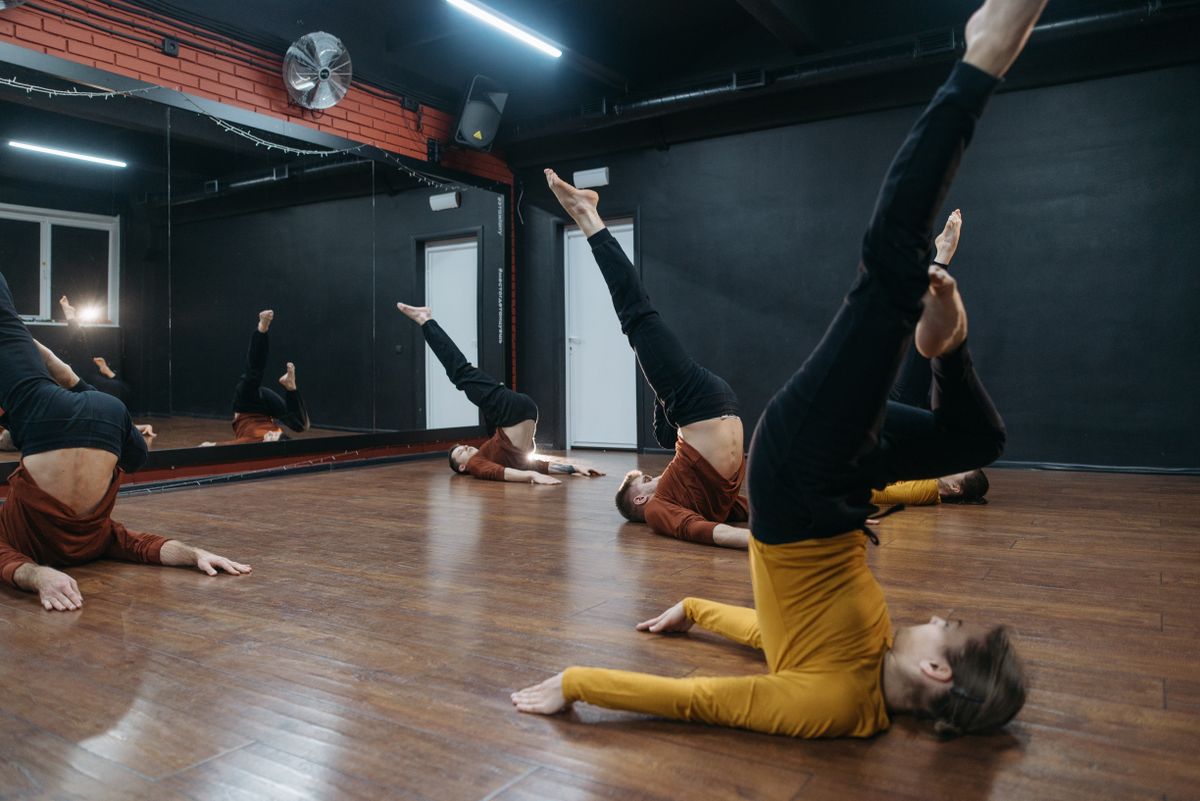
Every dance set to a specific musical composition has its own author: the person who first staged that exact choreography. If they can prove it, the copyright in the staging belongs to them. In practice there is nothing to prove it with: recordings of different numbers are scattered across the disks and phones of different people over different years, and when the question "whose dance is this" or "who staged it first" comes up, the answer comes not from an archive but from someone's memory.
The same unsorted mass of recordings carries a second problem. Some of the footage can be shown publicly without restriction, some cannot: the dancers themselves have the right to prohibit the use of their image or, conversely, to want the recordings of their own performances for themselves. Without sorting out who appears in which recording and what he or she said about it, this cannot be decided — the only option is to review everything again before each publication.
Digercules addresses both problems by turning filming from occasional into continuous, and the review of the accumulated material from manual into automatic.
How it works
A computer with storage and a video camera for continuous recording connected to it are installed permanently at the venue. In parallel, a local Wi-Fi network operates: spectators who film the performance on their own phones receive a QR code for transferring the recording directly in the hall, without internet and without installing an app — so the archive receives not only the fixed-camera footage but also live shots from different points in the hall. Spectators whose recordings prove useful can be credited with bonuses within the venue — for minutes of uploaded video.
Processing runs either entirely on the client's own hardware, or — if that hardware isn't powerful enough — is delegated to a specific external machine over a closed peer-to-peer channel (not a public cloud): the compute is physically located in the Caucasus and Eastern Europe, the client is always told explicitly which machine and which jurisdiction is doing the processing, and only text/structured results come back. The school's old recordings — what lay for years on disks and in phones without sorting — go through the same processing: Digercules sorts them by numbers, dates and performers and assembles an archive of already-staged dances, rather than simply a folder of files.
Before publication, the assembled material passes through two filters. Face recognition matches frames to dancers and makes it possible to obtain their consent to publication individually, rather than through a general request for the whole school; where consent is absent, the face can be removed from the frame or blurred. The soundtrack is checked separately from the video: a license for commercial use and public performance of the audio recording is requested from the rights holder before publication, not after.
Objections
"We have no single archive — the recordings are scattered across disks and phones of different people" — that is where the review starts: the program works with any number of scattered sources and itself finds duplicates and overlaps between them, in the same way as in archives of concerts and club evenings.
"Dancers have different attitudes toward publishing their performances" — this is the reason to review the archive by frames rather than publish the evening as a whole: face recognition makes it possible to settle the question of consent for each dancer separately, instead of either publishing everything or publishing nothing.
First contact
A pilot on recordings of several numbers — review by performers and staging dates in a few hours of machine time, without publishing the recordings themselves. The equipment (computer, camera, Wi-Fi) is installed at the venue separately and belongs to it; exclusive copyright in the recorded material is assigned to the rights holder — the choreographer of the dance or the school.